

Useful resources for employers
Watch the webinar
Top tips & links
Achieving work-life balance
When you hear the phrase ‘work-life balance’, do you imagine working fewer hours, enjoying more time with loved ones and a life free from stressful emails? Sounds lovely, doesn’t it? But for many of us, that version of balance feels impossible and often unrealistic. Deadlines exist, customers need us, and problems arise.
Work–life balance isn’t a destination. It’s a rhythm. Some weeks require more work. Some require more life. The goal isn’t perfection – it’s noticing when you lean too far in one direction and gently correcting it.
This topic will help you build small, meaningful habits that bring you closer to a balance from where you are right now. There are helpful tips, links to external support and a short 10 min webinar.
You can also download a factsheet and a poster to share the activities and resources with your colleagues.
Everyone deserves a life where both their work and their time outside of work are valued too.
Did you know?
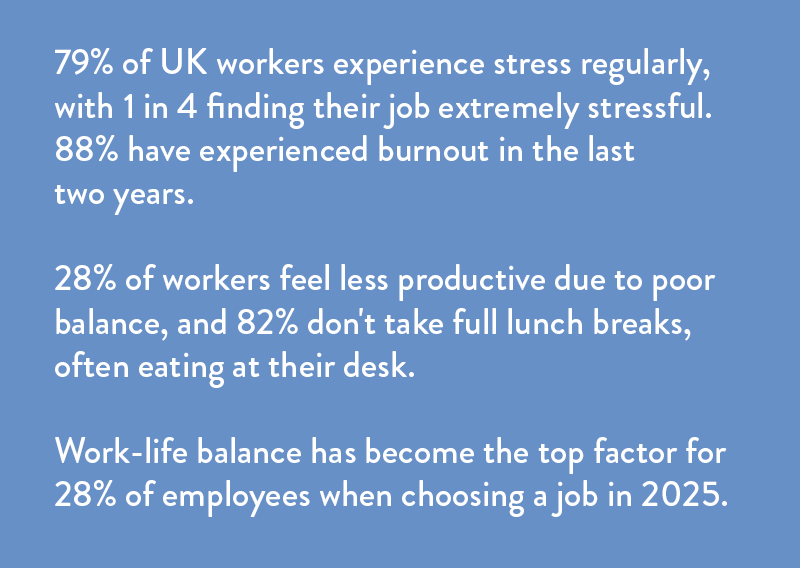
Sources: CIPD, Work.Life, and Mental Health UK reports.
Webinar: Achieving work-life balance
This short webinar will help you to understand:
- How you just need better tools, not fewer hours
- Ways to reclaim your time and your headspace
- Why balance isn’t about working less – it’s about living more
- Practical tips for real people with real jobs
A poster and factsheet to use in your organisation
Here’s a factsheet of practical tips to achieve work-life balance; along with a poster. Feel free to download and share, print and display them, or email them to your employees.
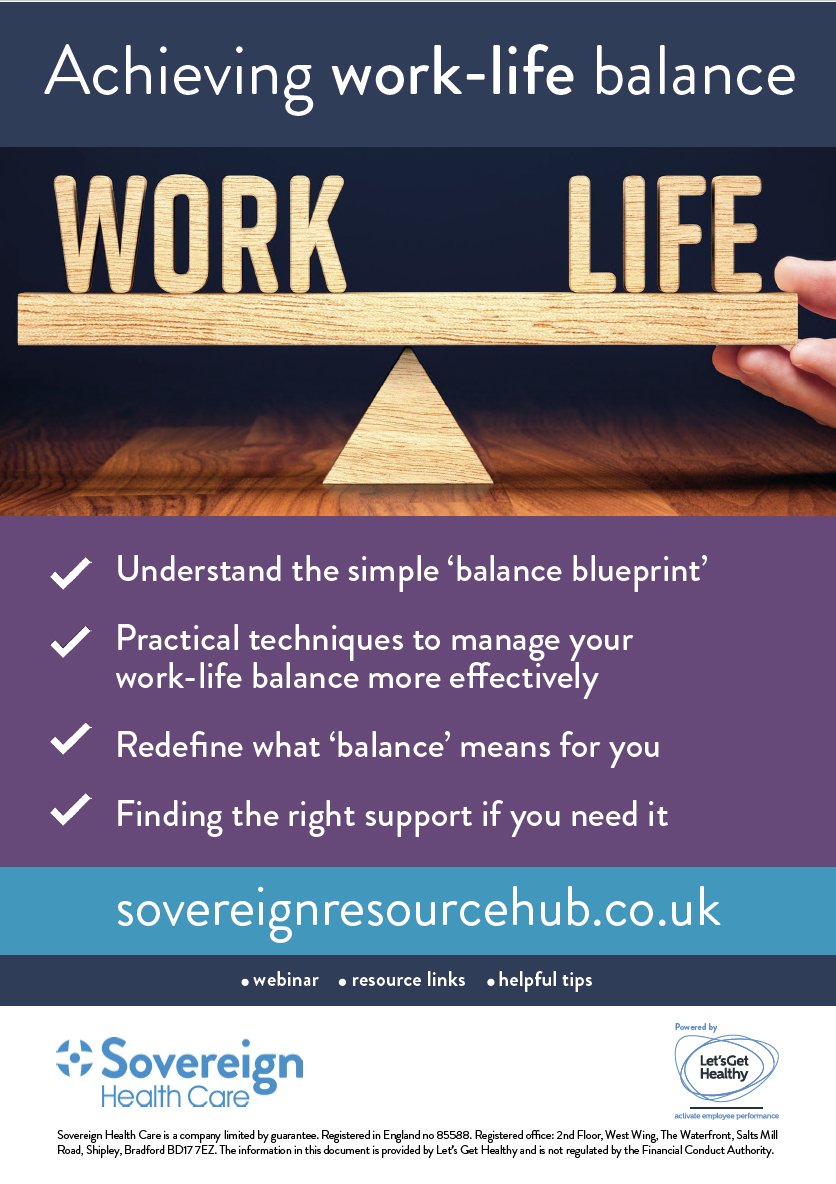
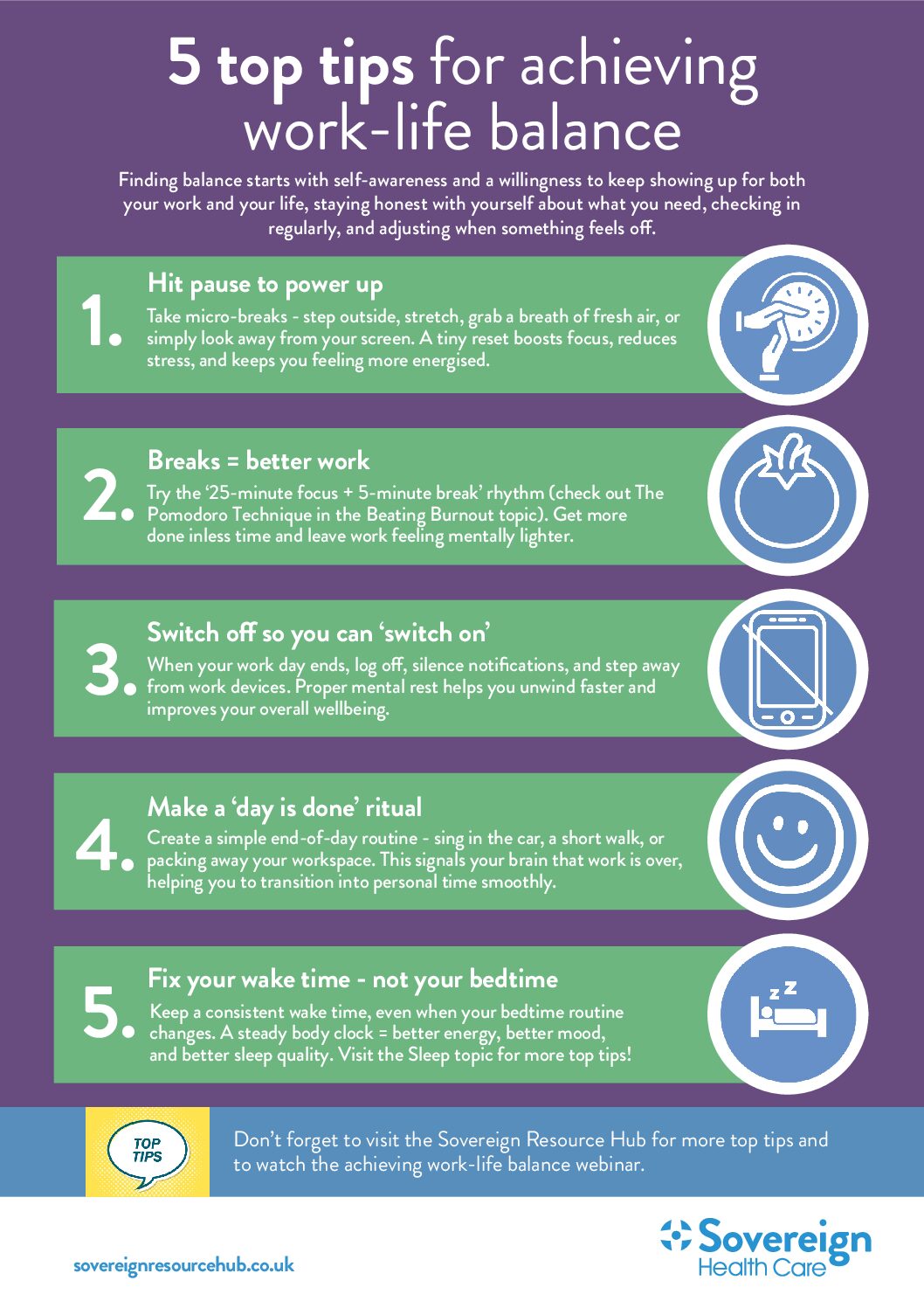
Here are some simple and practical techniques to help you manage your work-life balance more effectively
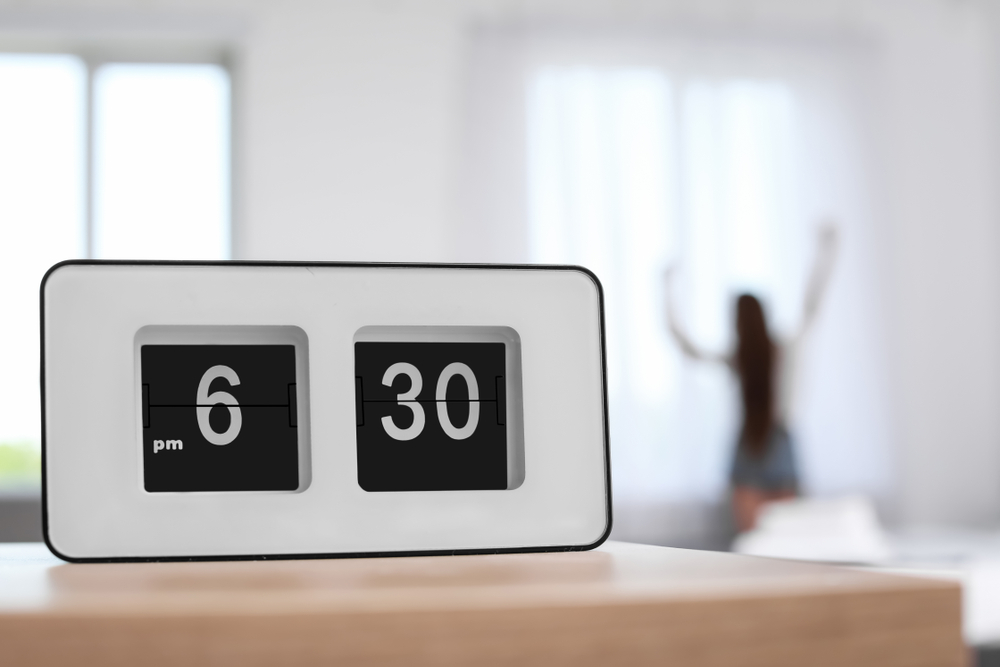
Protect sleep by fixing the ‘wake time’, not the bedtime
Some people can disconnect from work easily, but others still think about it late into the night. If you struggle to mentally unplug, you might need structured ways to help your mind switch off.
For shift workers and busy parents, a perfect sleep pattern isn’t always realistic. But there is evidence that keeping a consistent wake-time , even if sleep hours vary, helps to stabilise your body clock.
Try to:
- Choose a wake-up time you can stick to 80% of the week
- Expose yourself to natural daylight or artificial light for 20–30 minutes after waking to help reset your circadian rhythm
- Keep any nap time to under 30 minutes to avoid grogginess
This can help to improve your mood and alertness, and can help reduce the risk of long-term fatigue.
Top tip: Keep a ‘worry notebook’ where you can offload thoughts and return to sleep. This will give your mind permission to rest so you have more energy to solve them tomorrow.

If you want to reduce your working hours, start with how you use them
Try this simple ‘Balance Blueprint’ to help you work smarter, not longer:
Tackle complex tasks at the start of the day – Your brain is fresher, and solving challenges early prevents late-in-the-day overrun.
Save repetitive tasks for the end of the day – They take less concentration and are easier when your energy may dip.
Talk to colleagues/team member earlier in the day – Quick chats 15 minutes before the end of a working day can accidentally turn into a 45-minute issue that keeps you back late. It could also result in you taking another person’s worry and stress home with you.
Be bold about recurring meetings – Ask yourself: Do we still need this? Can we make it shorter? Can it be monthly instead of weekly? Could we switch to updates via chat or email?
Small tweaks = real time saved.

Supporting colleagues in your workplace
Strong social support is key to workplace wellbeing. The good news: it doesn’t require lots of social events or long conversations. If you’re a manager or you spot someone struggling with work tasks – checking in with them with a simple ‘How’s your day going?’ can help them to open up and build their resilience. You can start by asking:
- “Is there anything you could stop doing that would free up space?”
- “What tasks are you struggling with the most? Can any be delegated or reduced?”
- “How can I support you in protecting your downtime?”
- “How can I help you improve your work-life balance?”
Sometimes balance doesn’t mean changing jobs, but changing habits, expectations, and boundaries.

Redefine what ‘balance’ means for you
You get to decide what balance looks like. Pause and think about what needs to change. Maybe ask yourself: What’s currently causing me stress or unhappiness? How is that affecting my work and personal life? What am I prioritising? What am I losing out on? As a starting point here are a few ideas of what balance could look like:
- Log off at a consistent time every day
- Switch off work notifications outside working hours
- Take a walk before or after work
- Making the most of your weekend
- A lunch break away from your desk, every day (yes, every day!)
- Keep home and work areas separate when working from home
You don’t have to overhaul your life, balance often comes from small, stubborn acts of self care.
Additional support and resources
All the videos and links to further information shared, have been peer reviewed, continue to be free at the time of writing this topic.
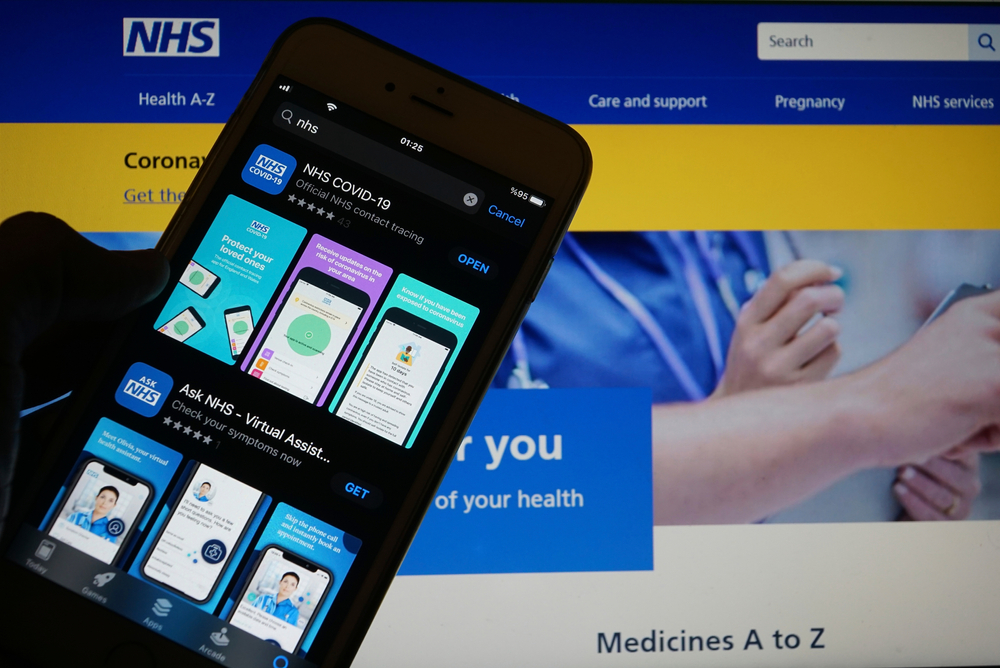
6 simple tips to tackle working from home.
https://www.nhs.uk/every-mind-matters/mental-wellbeing-tips/simple-tips-to-tackle-working-from-home/
Top tips on how to achieve a good work-life balance from the Mental Health Foundation.
https://www.mentalhealth.org.uk/explore-mental-health/a-z-topics/work-life-balance
WorkLife Central on demand – offers bitesize video shorts, event recordings and ready-to-view videos.
https://www.worklifecentral.com/OnDemand
Here’s an article on the importance or work-life balance.
https://thehappinessindex.com/blog/importance-work-life-balance/