

Useful resources for employers
Listen to the podcast
Top tips & links
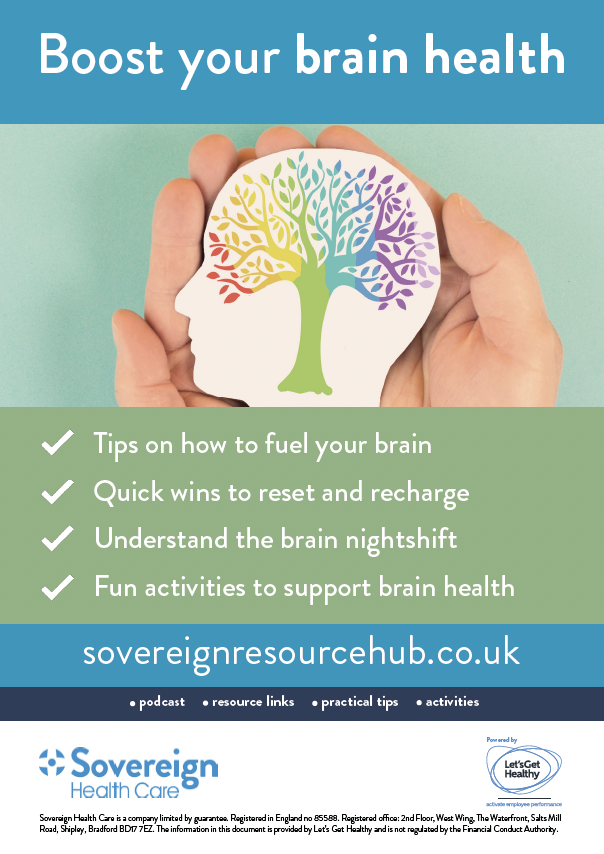
Boost your brain health
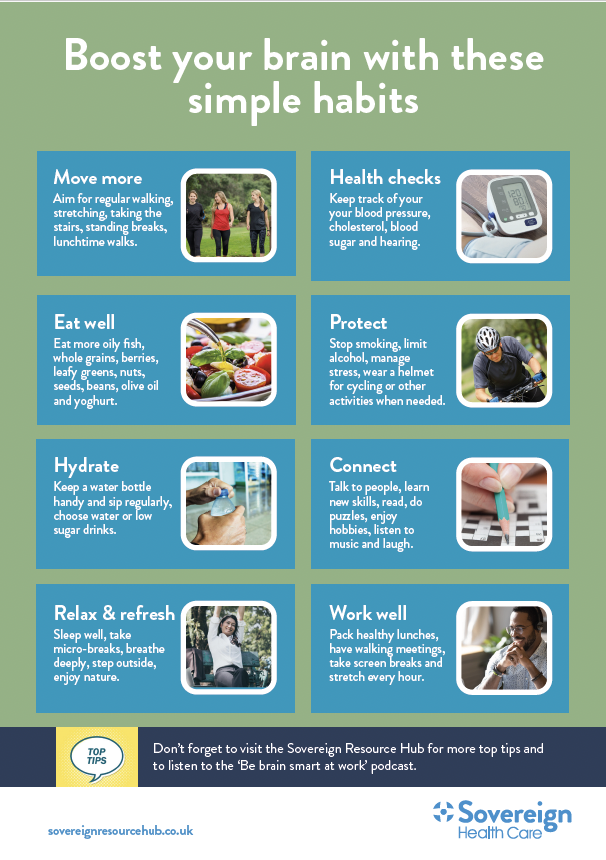
Simple everyday habits for a sharper, healthier mind
How often do you stop for a moment and think about one of the most important organs in your body… your brain?
Sleep, exercise and stress all play a role in how well our brains function. But brain health isn’t about any single habit – it’s shaped by how we move, rest, connect and recover. There’s no quick fix, but simple, consistent habits can make a real difference over time.
This topic will help you learn how everyday habits affect your brain, from what to eat to how you rest and recharge, and where to turn if you need support.
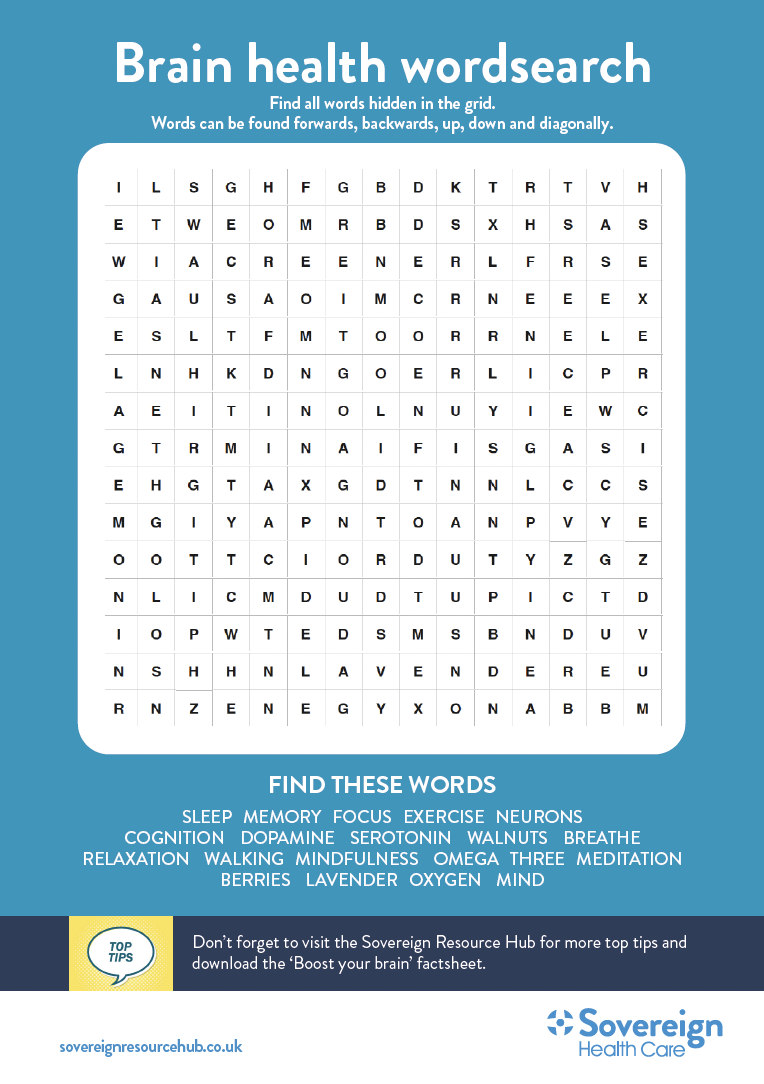
You’ll find helpful tips, links to external support and a short 10 min podcast. You can also download a factsheet and a poster to share with your colleagues, plus some fun activities to support brain health.
How much do we know about our brain health?
A survey of 6,816 adults across the UK and Ireland found that while most people feel confident about their brain health, there are gaps in awareness around key risk factors. Understanding what affects our brain is the first step to making positive changes.
- 79% rated their own brain health as good
- 91% recognised about cognitive stimulation and 88% about exercise, as beneficial ways to protect brain health
- But only 62% knew high blood pressure was a risk factor, and just 35% knew about hearing loss
- Top barriers to adopting a brain-healthy lifestyle: changes are not enjoyable (44%), lack of motivation (33%), lack of trusted information (27%)
Source:The Brain Health and Lifestyle Survey 2021 – BMC Public Health
Podcast: Be brain smart at work
- Fuelling your brain
- How to reset and recharge yourself
- The physiological sigh
- The brain night shift
- Where to go for support
A poster, factsheet and activities to use in your organisation
Here’s a factsheet of practical tips to boost your brain health; along with a poster. There’s also a couple of fun activities to complete to keep your brain working. Feel free to download and share, print and display them, or email them to your employees.
Extra virgin olive oil
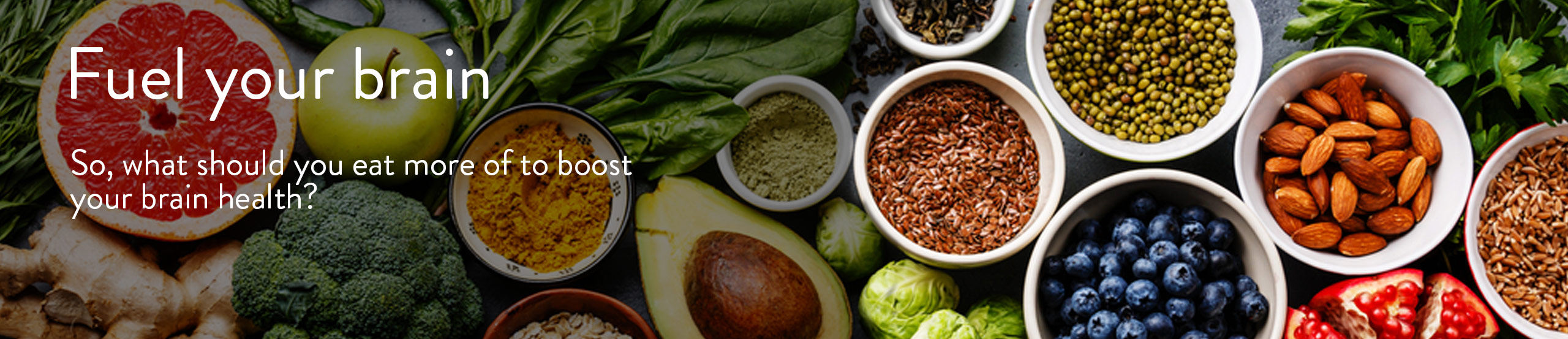
A key part of the Mediterranean diet, rich in polyphenols and healthy fats that support overall health and reduces inflammation.
Why it matters?
Supports brain cell health, memory and concentration.


Use as your main cooking oil, or drizzle over vegetables, salads, soups or beans.
Berries
Blueberries, strawberries, blackberries and blackcurrants are rich in flavonoids and anthocyanins, which may help protect brain cells as we age. Frozen berries are a cost-effective option and last longer.
Why it matters?
They may help support memory, focus and healthy brain ageing.

Add to porridge, yoghurt or smoothies, or enjoy a quick snack.
Nuts and seeds
Walnuts, flaxseed, chia seeds, pumpkin seeds and almonds provide healthy fats, magnesium, vitamin E and plant compounds that help support cell health.
Why it matters?
Helps protect brain cells and support memory and concentration.
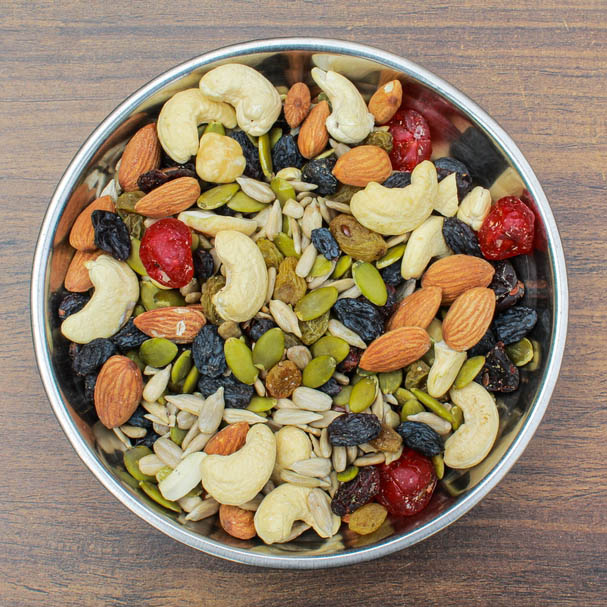
Have a small handful daily. Add them to meals or keep some at your desk for a snack.
Wholegrains
Oats, barley, quinoa, brown rice, rye and wholegrain bread help keep blood sugar levels steady, providing a consistent supply of energy to the brain.
Why it matters?
Stable energy levels support focus and concentration throughout the day.
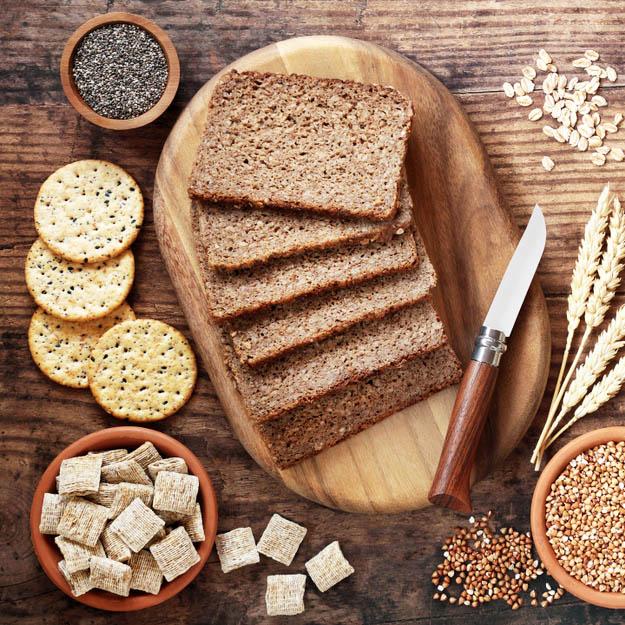
Choose wholegrain options most of the time instead of refined alternatives.
Here are a couple of recipes to get you started
Try a spring salad with leafy greens and nuts, or a blueberry and banana smoothie for a brain-boosting breakfast or snack.

Step away to reset your focus
Spending time in natural surroundings can help your brain recharge. Whether it’s a short walk outside or a few moments looking outside, these small pauses can reduce mental fatigue and restore focus.
Why it works?
Natural environments hold your attention without demanding effort, giving your brain a break from intense tasks. At the same time, movement and fresh air helps boost blood flow and improve mood.


Take a short walk outside between meetings or at lunch. Leave your phone behind and notice your surroundings, and spend a couple of minutes looking at trees, sky or greenery.
A quick way to calm your brain
A simple breathing technique, known as the physiological sigh, can help reduce stress quickly.
- Take a deep breath in through your nose.
- Take a second, smaller breath to top it up.
- Slowly exhale through your mouth.
- Repeat three to five times.
Why it works?
A longer exhale signals safety to your nervous system and can quickly reduce that overloaded feeling.

Take a short walk, pause to notice your surroundings, then finish with a few slow breaths to reset.
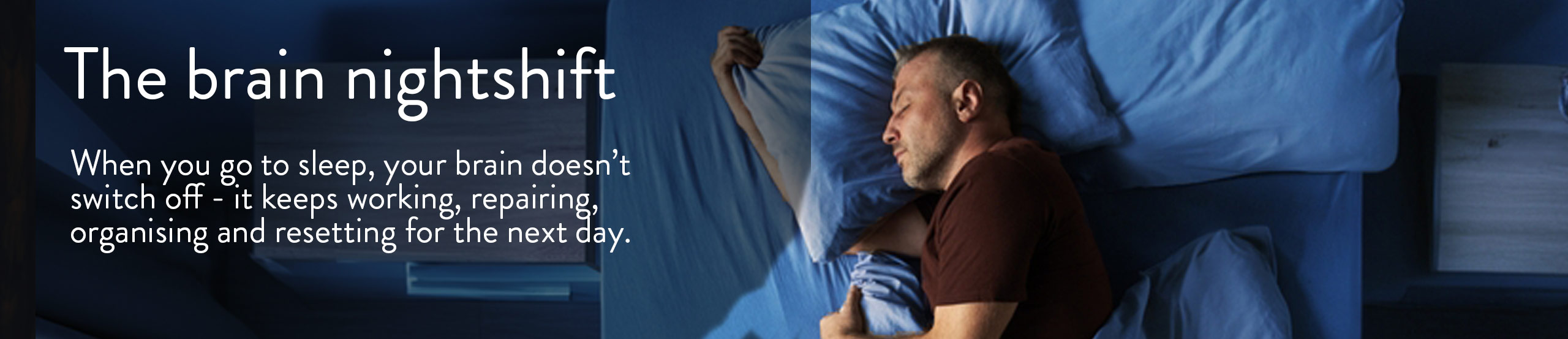
Why sleep matters
A good night’s sleep helps with:
- Memory and learning
- Concentration and decision making
- Mood and emotional balance
- Stress recovery
- Long-term brain health
Poor sleep has been linked with a higher risk of cognitive decline, reduced mental performance and poorer emotional wellbeing.
Find more tips for better sleep on our sleep topic
What your brain gets up to overnight
Filing memories
During sleep, your brain strengthens important memories and clears out less useful information, which is why things can feel clearer after a good night’s rest.
Deep cleaning
Your brain’s waste clearance system (the glymphatic system) becomes more active during sleep, helping remove build-up from the day.
Resetting emotions
Sleep helps process emotional experiences and regulate stress. After a good rest, your brain is better able to focus, problem solve and stay patient.
Clear your head before bed
Writing things down before bed can help reduce worry and mental overload, making it easier to fall asleep.
Try a brain download before you go to bed. Spend five minutes writing down:
- Anything you need to remember tomorrow
- Worries you can’t solve tonight
- Your top three priorities for tomorrow
Additional support and resources
For more information and practical tips on improving your brain health, these links are a great place to start:
Eating for a better mood
https://www.nutrition.org.uk/nutrition-for/food-and-the-brain
Alzheimers Research – Examining the traditional Mediterranean diet
https://www.alzheimersresearchuk.org/news/what-should-we-eat-for-a-healthy-brain
NHS Mental Wellbeing Audio Guides
Listen to a series of audio guides to help you boost your mood and help you sleep better. https://www.alz.org/help-support/brain_health/10-healthy-habits-for-your-brain https://www.uhb.nhs.uk/services/neurology/brain-health-advice
https://www.nhs.uk/mental-health/self-help/guides-tools-and-activities/mental-wellbeing-audio-guides
Alzheimer’s Association – Healthy habits for your brain
NHS – Brain health advice